
Power interruptions can severely affect industrial machinery, automation systems, and production schedules. For facilities that rely on continuous operations, installing the right backup system is essential. Companies investing in industrial UPS solutions in India must ensure that installation is handled with careful planning. Even a high capacity industrial UPS system can fail to deliver expected performance if common installation mistakes are overlooked.
Inaccurate load calculation
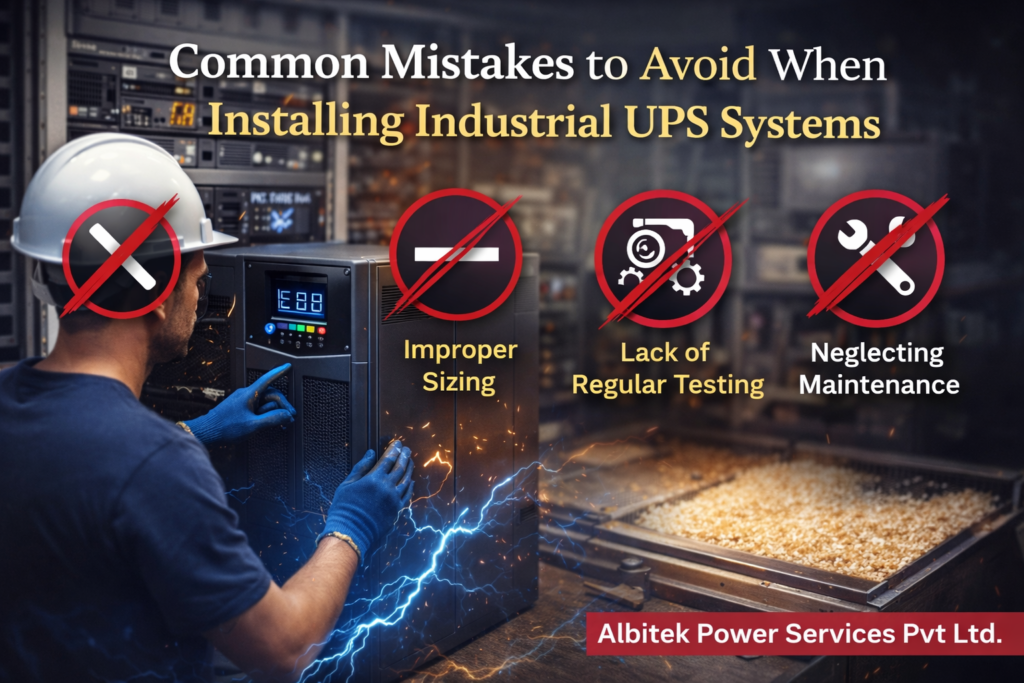
Incorrect load estimation is one of the most frequent installation mistakes. Industrial facilities often operate several machines, control systems, and electrical equipment at the same time. If the total connected load is underestimated, the UPS may become overloaded during power interruptions. This can affect system stability and reduce equipment life. A proper assessment of present and future power demand is necessary before installation.
Selecting an unsuitable installation location
The environment where a UPS system is installed plays an important role in its efficiency. Industrial spaces may contain dust, heat, and moisture that can affect electronic components. Installing the UPS in areas without proper ventilation or temperature control can lead to overheating. A clean and well ventilated location helps maintain stable performance and makes maintenance easier.
Ignoring power quality and electrical conditions
Industrial power supply often experiences voltage fluctuations, harmonics, and sudden spikes. Installing a UPS without evaluating these electrical conditions can affect system performance. Before installation, facilities should analyze the incoming power supply and ensure that the industrial UPS solutions in India that they are opting for is compatible with existing electrical infrastructure. Proper integration helps protect sensitive machinery from unstable power conditions.
Poor battery planning and monitoring
Batteries are the core of any UPS system and if battery capacity or configuration is not planned correctly, the backup duration may not meet operational needs. Industrial batteries also require periodic monitoring. Temperature changes, aging, and improper charging conditions can reduce battery efficiency. Regular inspection helps maintain reliable backup during power failures.
Improper system integration with existing infrastructure
Industrial UPS systems must be properly connected with electrical panels, distribution boards, and protection systems. Incorrect wiring or grounding can lead to unstable switching during power outages.
Professional installation ensures that the UPS integrates smoothly with the facility’s electrical network. Testing the system before full operation confirms that it will perform correctly during unexpected power interruptions.
Lack of routine maintenance after installation
Many industries assume that once a UPS system is installed it will continue functioning without attention. This approach often leads to performance issues over time. Routine inspection helps identify problems such as loose connections, declining battery performance, or ventilation issues. Preventive maintenance ensures that the UPS system continues to provide reliable power protection.
Conclusion
Industrial facilities require stable power infrastructure to protect equipment and maintain productivity. Avoiding common installation mistakes such as incorrect load calculation, unsuitable installation locations, poor battery planning, and weak system integration improves the performance of backup systems. Companies investing in industrial UPS solutions in India benefit from working with experienced providers. At Albitek Power Services Pvt Ltd., we design and support advanced industrial UPS system solutions that help industries maintain uninterrupted operations.